
CrossFit Glossary
Whether you’re new to CrossFit or brushing up on terms, this glossary explains the most common movements, acronyms, workout types, and equipment you’ll see on the whiteboard or hear in class.
9 Foundational Movements of CrossFit
The core functional movements taught early in CrossFit because they translate directly to real-world strength and athletic capacity. They form the basis for more complex lifts and skills. The movements are:
- Air Squat
- Front Squat
- Overhead Squat
- Shoulder Press (Strict Press)
- Push Press
- Push Jerk
- Deadlift
- Sumo Deadlift High Pull (SDHP)
- Medicine Ball Clean
Together, these movements:
- Cover squat, hinge, push, pull, and power
- Build a foundation for Olympic lifts and gymnastics
- Emphasize mechanics → consistency → intensity, the core CrossFit progression
A
Abmat Sit-Up
A core movement performed with an AbMat placed under the lower back to support a natural spinal curve and increase range of motion. The athlete begins seated with feet together or anchored, touches the floor overhead at the bottom, then sits up to touch the feet or beyond at the top. AbMat sit-ups develop midline strength and endurance and are commonly used in conditioning workouts for high-repetition core work.
Air Squat
A foundational bodyweight squat that develops lower-body strength, balance, and mobility. The athlete lowers their hips below parallel while keeping the chest upright, feet grounded, and knees tracking over the toes. Air squats appear frequently in warm-ups, conditioning workouts, and skill development because they reinforce proper squat mechanics without added load.
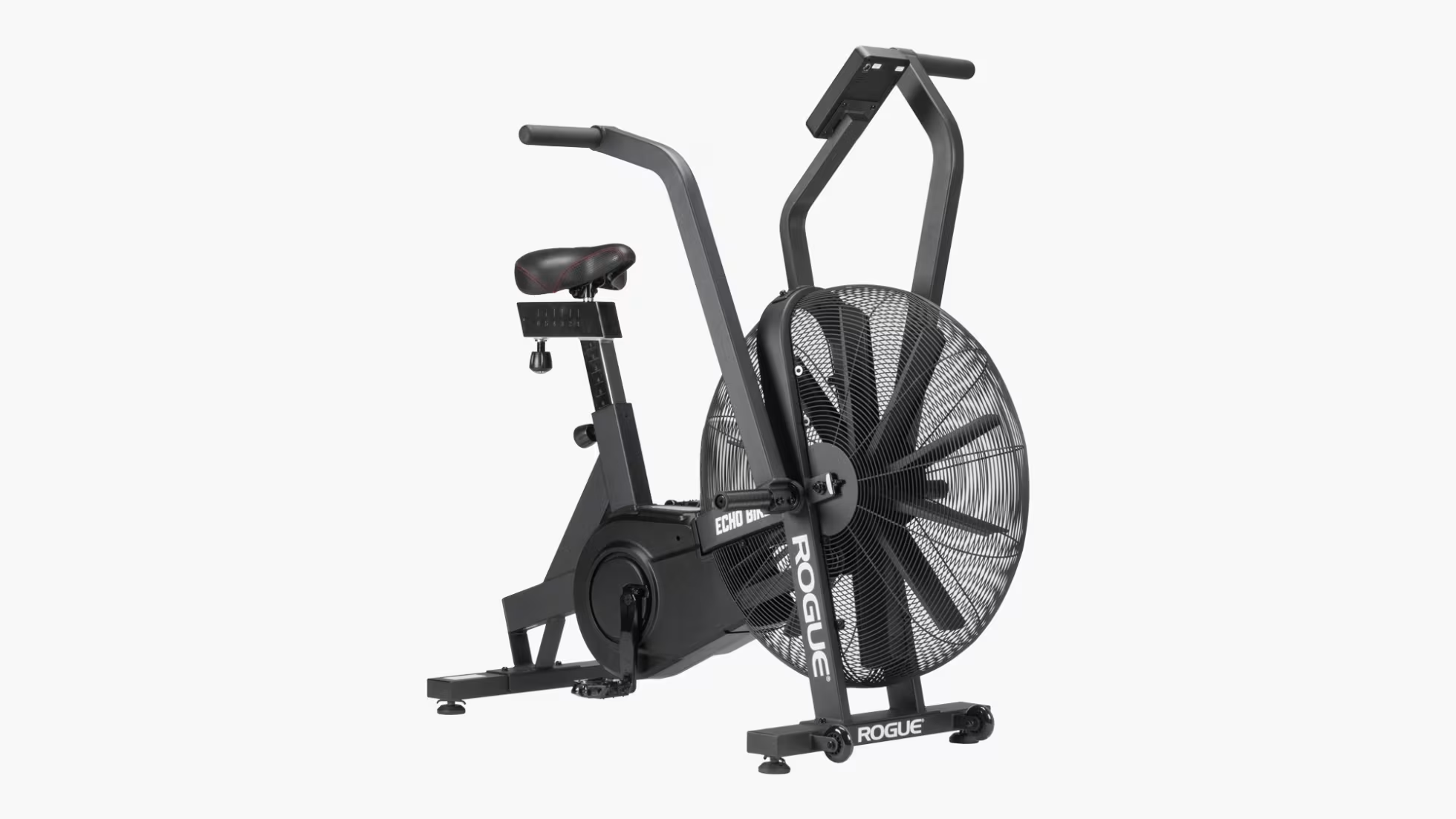
Assault Bike / Echo Bike
A high-intensity fan bike used for conditioning, intervals, and warm-ups. Resistance increases as effort increases—the harder you pedal, the harder it becomes. Commonly used for calories, time, or interval-based workouts.
AMRAP
As Many Rounds or Reps As Possible. A workout format where the athlete completes as many rounds or repetitions of a given set of movements as possible within a fixed time cap. AMRAPs emphasize pacing, consistency, and sustained effort.
B
Back Squat
A foundational strength movement where the barbell is placed across the upper back and the athlete squats until the hips drop below parallel, then stands back up to full extension. The back squat allows for the heaviest loads to be lifted and primarily develops leg and hip strength while reinforcing proper bracing and squat mechanics. It is a cornerstone lift for building overall strength and athletic capacity.
Back Rack Lunge
A lunge variation performed with a barbell resting across the upper back, similar to a back squat setup. The athlete steps forward, backward, or walks into a lunge while maintaining a stable torso and controlled foot placement, then returns to standing. Back rack lunges develop lower-body strength, balance, and core stability while reinforcing proper bracing under load.
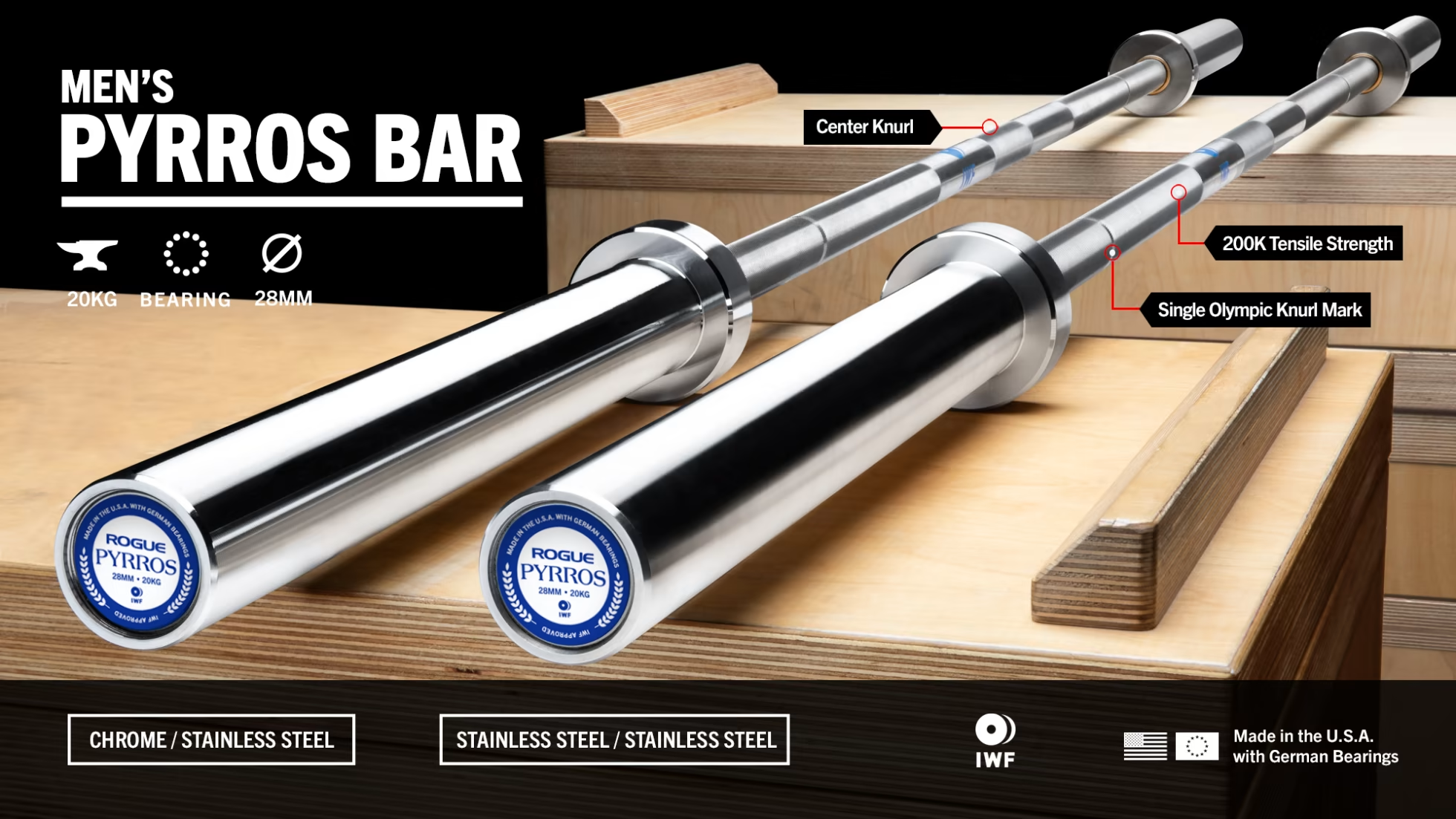
Barbell
A standard Olympic barbell used in CrossFit, weighing 45lb / 20kg (men’s) or 35lb / 15kg (women’s). Barbells are used for major lifts such as deadlifts, cleans, snatches, squats, presses, and jerks.
Barbell Complex
A sequence of multiple barbell movements performed back-to-back without setting the bar down between reps or movements. The athlete completes a prescribed number of repetitions for each movement before progressing to the next, maintaining continuous control of the barbell. Barbell complexes challenge strength, conditioning, grip endurance, and movement efficiency and are commonly used in conditioning workouts, skill development, and strength endurance training.
Bar Dip
A bodyweight pressing movement performed on parallel bars or a straight bar, where the athlete supports themselves at the top with arms locked out, then lowers the body by bending the elbows until the shoulders dip below the elbows before pressing back to full extension. Bar dips develop chest, shoulder, and triceps strength and require good shoulder stability and control. They are commonly used as a progression toward muscle-ups and other advanced gymnastics movements.
Bar Muscle Up / Kipping (BMU)
An advanced gymnastics movement where the athlete transitions from a hang below the pull-up bar to a locked-out support position above it using a coordinated kip. The movement combines a powerful pull, an aggressive hip drive, and a smooth turnover of the hands and shoulders over the bar. Kipping bar muscle-ups demand strength, timing, and shoulder stability and are commonly used in higher-skill conditioning workouts and competitive CrossFit settings.
Bar Muscle Up / Strict (BMU)
An advanced gymnastics movement where the athlete transitions from a dead hang below the pull-up bar to a locked-out support position above it using only upper-body strength—without assistance from a kip. The movement requires significant pulling strength, a strong transition, and pressing control to finish above the bar. Strict bar muscle-ups are commonly used to build foundational strength and technical proficiency for kipping variations and represent a high level of gymnastics skill.
Benchmark WOD
Named workouts used to measure progress and performance over time. Benchmark WODs, such as Fran, Cindy, and Murph, are repeated periodically to track improvements in strength, conditioning, and efficiency.
Bench Press
A horizontal pressing strength movement where the athlete lies on a bench and lowers a barbell to the chest before pressing it back to full arm extension. The bench press primarily develops chest, shoulder, and triceps strength while reinforcing upper-body pressing mechanics. It is commonly used in strength training to build maximal pressing power and support other upper-body movements.
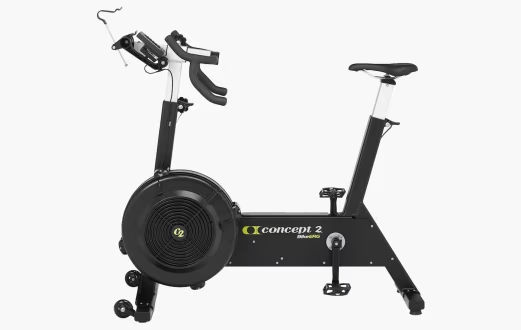
Bike Erg
A stationary air-resistance bike designed to closely mimic outdoor cycling mechanics. The Bike Erg uses a flywheel to create resistance based on effort, allowing athletes to control pace and intensity. It is commonly used for conditioning workouts, intervals, and aerobic training and is lower-impact than running.
Box
A common term used to refer to a CrossFit gym or training facility. The term comes from the simple, warehouse-style spaces where many CrossFit gyms originally operated. Today, “box” is used casually within the CrossFit community to describe where athletes train, regardless of the facility’s size or layout.
Box Jump
A plyometric movement where the athlete jumps from the floor onto a raised box or platform, landing with control and full foot contact. The movement emphasizes explosive leg power, coordination, and body awareness while requiring safe landing mechanics. Box jumps are commonly used in conditioning workouts to develop power and elevate heart rate, with athletes stepping down to reduce impact when appropriate.
Box Step-Up
A unilateral lower-body movement where the athlete steps onto a box or platform with one foot, drives through the heel to stand fully on top, then steps back down under control. Box step-ups develop leg strength, balance, and coordination while reinforcing proper single-leg mechanics. They are commonly used in conditioning workouts and can be loaded with dumbbells, kettlebells, or a barbell for added difficulty.
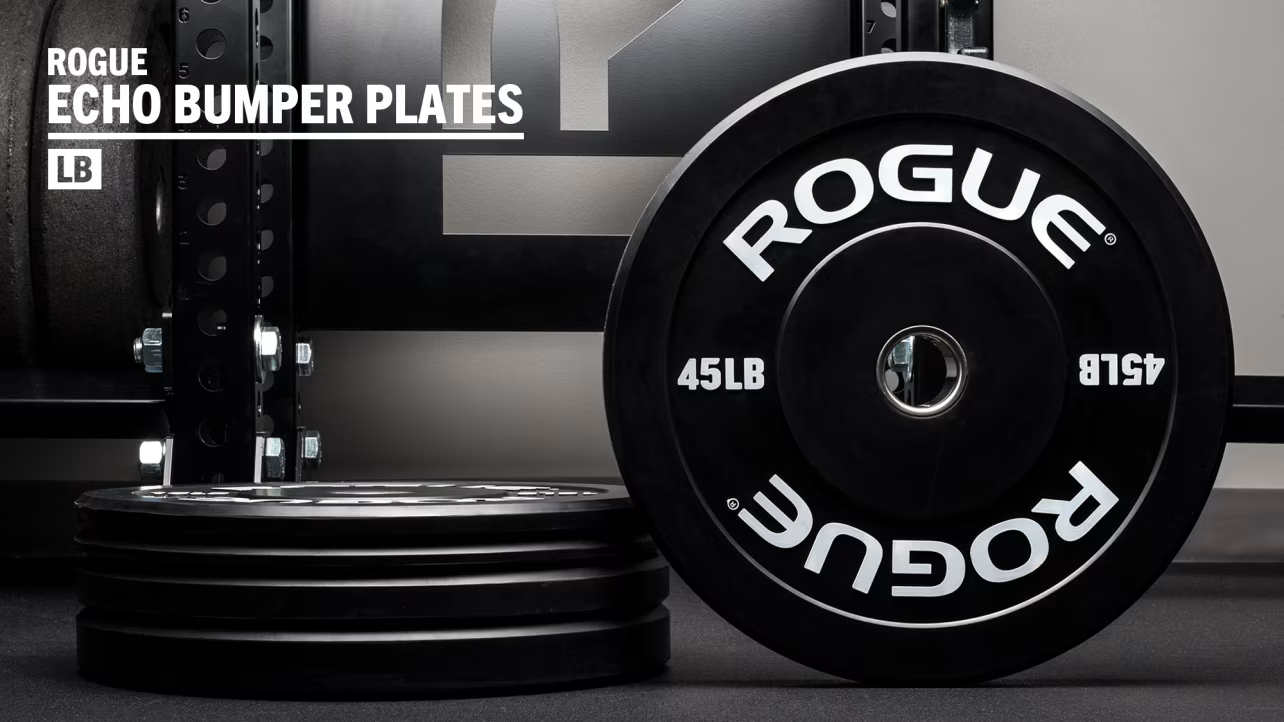
Bumper Plates
Rubber-coated weight plates designed to be safely dropped during Olympic lifts. All bumper plates share a uniform diameter regardless of weight, allowing consistent bar height from the floor.
Burpee
A full-body movement that combines a squat, plank, push-up, and jump into one continuous repetition. From a standing position, the athlete lowers to the floor, returns to standing, and finishes with a jump and clap overhead. Burpees are commonly used in conditioning workouts because they elevate heart rate quickly while demanding coordination, stamina, and mental toughness.
Burpee Box Jump Over (BBJO)
A conditioning movement that combines a burpee with a box jump over. The athlete performs a burpee on one side of the box, then immediately jumps onto the box and continues over to the opposite side before beginning the next repetition. This movement elevates heart rate quickly while demanding coordination, power, and stamina, and is commonly used in conditioning workouts for its high metabolic demand and continuous flow.
C
Chest to Bar Pull-Up / C2B (Kipping)
A kipping pull-up variation where the athlete uses coordinated hip drive and a hollow-to-arch swing to bring the chest into contact with the pull-up bar. This movement requires greater pulling strength, timing, and range of motion than a standard kipping pull-up. Kipping chest-to-bar pull-ups develop upper-body strength, coordination, and efficiency and are commonly used in higher-skill conditioning workouts.
Chest to Bar Pull-Up / C2B (Strict)
A strict pulling gymnastics movement where the athlete pulls from a dead hang until the chest makes contact with the pull-up bar, without using a kip or lower-body momentum. This movement requires greater pulling strength and range of motion than a standard strict pull-up. Strict chest-to-bar pull-ups build upper-body strength, control, and shoulder stability and are commonly used to develop foundational strength for kipping and higher-skill gymnastics movements.
Chipper
A long, sequential workout made up of multiple movements completed in order, typically with higher repetition counts. Chippers test endurance, mental toughness, and pacing rather than short, high-intensity bursts.
Clean
An explosive lift where the barbell is pulled from the ground and received in the front rack position on the shoulders. The clean relies on powerful hip extension, coordination, and timing to move the bar efficiently. It is commonly performed as a power clean or squat clean depending on load and workout intent.
Clean and Jerk
A two-part Olympic lift where the barbell is first lifted from the floor to the shoulders (the clean), then driven overhead to full lockout (the jerk). The clean requires explosive power and precise positioning, while the jerk relies on speed, coordination, and stability to receive the bar overhead. The clean and jerk is a cornerstone of Olympic weightlifting and CrossFit, developing full-body strength, power, and technical proficiency.
D
Deadlift
A fundamental strength movement where the barbell is lifted from the floor to a standing position with hips and knees fully extended. The deadlift emphasizes the posterior chain—glutes, hamstrings, and back—while reinforcing proper hinging mechanics. It is a cornerstone lift for building raw strength and safe lifting habits.
Double Under
A jump rope skill where the rope passes under the feet twice during a single jump. The athlete maintains an upright posture while using quick wrist rotation and efficient jumping mechanics to cycle repetitions smoothly. Double-unders develop coordination, timing, and cardiovascular endurance and are commonly used in conditioning workouts as a higher-skill alternative to single-unders.
Dumbbell Clean
A dumbbell clean variation where one or two dumbbells are lifted from the floor or hang position to the shoulders. The athlete uses explosive hip drive to move the dumbbell(s) upward and receives them in a front rack position, either in squat catch. Dumbbell cleans develop coordination, unilateral strength, and full-body power and are commonly used in conditioning and skill-based workouts.
Dumbbell Deadlift
A deadlift variation performed using one or two dumbbells instead of a barbell. The athlete hinges at the hips to lower the dumbbell(s) toward the floor, then stands by driving through the heels and extending the hips. Dumbbell deadlifts reinforce proper hinge mechanics, build posterior-chain strength, and are commonly used as a beginner-friendly or lighter-load alternative in strength and conditioning workouts.
Dumbbell Front Squat
A squat variation performed while holding one or two dumbbells in the front rack or goblet position. The athlete lowers into a squat with an upright torso, then stands to full extension using the legs and core. Dumbbell front squats build lower-body strength, core stability, and proper squat mechanics and are commonly used as a scalable or unilateral alternative to barbell front squats.
Dumbbell Hang Clean
A dumbbell clean variation that begins with one or two dumbbells in the hang position above the knees and is received in a full squat. The athlete explosively extends the hips to elevate the dumbbell(s), then drops under into a deep squat before standing to full extension. Dumbbell hang squat cleans develop power, coordination, and lower-body strength while reinforcing proper clean mechanics in a unilateral or bilateral format.
Dumbbell Hang Clean and Push Jerk
A complex dumbbell movement that combines a hang squat clean with a push jerk. The athlete begins with one or two dumbbells in the hang position, explosively cleans them to the shoulders while dropping into a full squat, then drives the dumbbell(s) overhead using a dip-and-drive push jerk. This movement develops full-body power, coordination, and overhead stability and is commonly used in conditioning workouts for its high skill and metabolic demand.
Dumbbell Hang Power Clean
A dumbbell clean variation that begins with one or two dumbbells in the hang position above the knees. The athlete explosively extends the hips and pulls the dumbbell(s) upward, receiving them on the shoulders in a partial squat above parallel. Dumbbell hang power cleans emphasize speed, coordination, and hip drive while reducing the complexity of the pull from the floor, making them common in conditioning and skill-focused workouts.
Dumbbell Hang Power Snatch
A dumbbell snatch variation that begins with the dumbbell in the hang position above the knees rather than on the floor. The athlete explosively extends the hips and pulls the dumbbell overhead, catching it above parallel with a locked-out arm. This movement emphasizes speed, timing, and unilateral stability while reducing the complexity of the initial pull, making it common in conditioning workouts and skill development.
Dumbbell Hang Snatch
A dumbbell snatch variation that begins with the dumbbell in the hang position above the knees and is received in a full squat. The athlete explosively extends the hips to drive the dumbbell overhead, then drops under the weight into a deep squat before standing to full extension. This movement emphasizes power, coordination, mobility, and unilateral stability and is commonly used to build strength and skill for more advanced Olympic lifting patterns.
Dumbbell Overhead Squat
A squat variation performed while holding one or two dumbbells locked out overhead. The athlete lowers into a squat while maintaining a stable overhead position, upright torso, and active shoulders, then stands back to full extension. Dumbbell overhead squats challenge shoulder stability, core strength, balance, and mobility and are commonly used as a scalable or unilateral alternative to barbell overhead squats in strength and conditioning workouts.
Dumbbell Power Snatch
A unilateral Olympic-style movement where a single dumbbell is lifted from the ground to overhead in one smooth, explosive motion and caught above parallel. The athlete generates power through the hips and legs, then stabilizes the dumbbell overhead with a locked-out arm. Dumbbell power snatches develop coordination, balance, and power while challenging grip and core stability, and are commonly used in conditioning workouts and skill progressions.
Dumbbell Press
An overhead pressing movement performed with one or two dumbbells, starting from the shoulders and pressing to full arm extension overhead. The movement may be performed strictly or seated, depending on the workout. Dumbbell presses develop shoulder strength, unilateral stability, and core engagement and are commonly used in strength training and conditioning workouts.
Dumbbell Push Press
An overhead pressing movement performed with one or two dumbbells that uses a shallow dip and drive from the legs to assist the press. The athlete transfers power from the lower body through the core to move the dumbbell(s) overhead to full lockout. Dumbbell push presses develop shoulder strength, coordination, and unilateral stability and are commonly used in conditioning and strength workouts.
Dumbbell Squat Snatch
A unilateral Olympic-style movement where a single dumbbell is lifted from the ground to overhead in one continuous motion and received in a full squat. The athlete uses explosive hip drive to move the dumbbell upward, then drops under it into a deep squat before standing to full extension. Dumbbell squat snatches develop power, coordination, mobility, and overhead stability and are commonly used in higher-skill conditioning workouts and strength progressions.
Dumbbell Thruster
A full-body compound movement that combines a front squat directly into an overhead press using one or two dumbbells. The athlete uses the power generated from the squat to drive the dumbbell(s) overhead in one smooth motion, finishing with full extension of the hips, knees, and arms. Dumbbell thrusters challenge coordination, core stability, and shoulder strength and are commonly used in conditioning workouts for their efficiency and high metabolic demand.
E
EMOM
Every Minute On the Minute. A workout format where a prescribed movement or set of movements is performed at the start of every minute. The remaining time in the minute is used for rest before the next interval begins. EMOMs emphasize consistency and repeatable effort.
F
Farmer’s Carry
A loaded carry movement where the athlete walks while holding heavy weights—typically dumbbells, kettlebells, or farmer’s handles—at their sides. The movement emphasizes grip strength, core stability, posture, and total-body endurance. Farmer’s carries are commonly used in conditioning workouts and functional training to build real-world strength and resilience.
For Time
A workout format where the athlete completes a prescribed set of movements or rounds as quickly as possible. The goal is to finish in the fastest time while maintaining proper movement standards.
Front Rack Lunge
A lower-body movement performed with a barbell, dumbbells, or kettlebells held in the front rack position across the shoulders. The athlete steps forward, backward, or walking into a lunge, lowering the back knee toward the floor while keeping an upright torso, then returns to standing. Front rack lunges develop leg strength, core stability, and posture while reinforcing front rack positioning under load.
Front Squat
A squat variation performed with the barbell resting in the front rack across the shoulders. The upright torso position places greater demand on the quads and core while reinforcing clean mechanics. Front squats are frequently used to build strength for Olympic lifts and improve squat depth and posture.
Full Round Relay (FRR)
A team workout format where one athlete completes an entire round of a workout before tagging the next teammate, who then completes the same full round. Teams continue rotating through athletes until all prescribed rounds are finished. Full round relays emphasize pacing, accountability, and consistent effort while allowing brief recovery between turns.
G
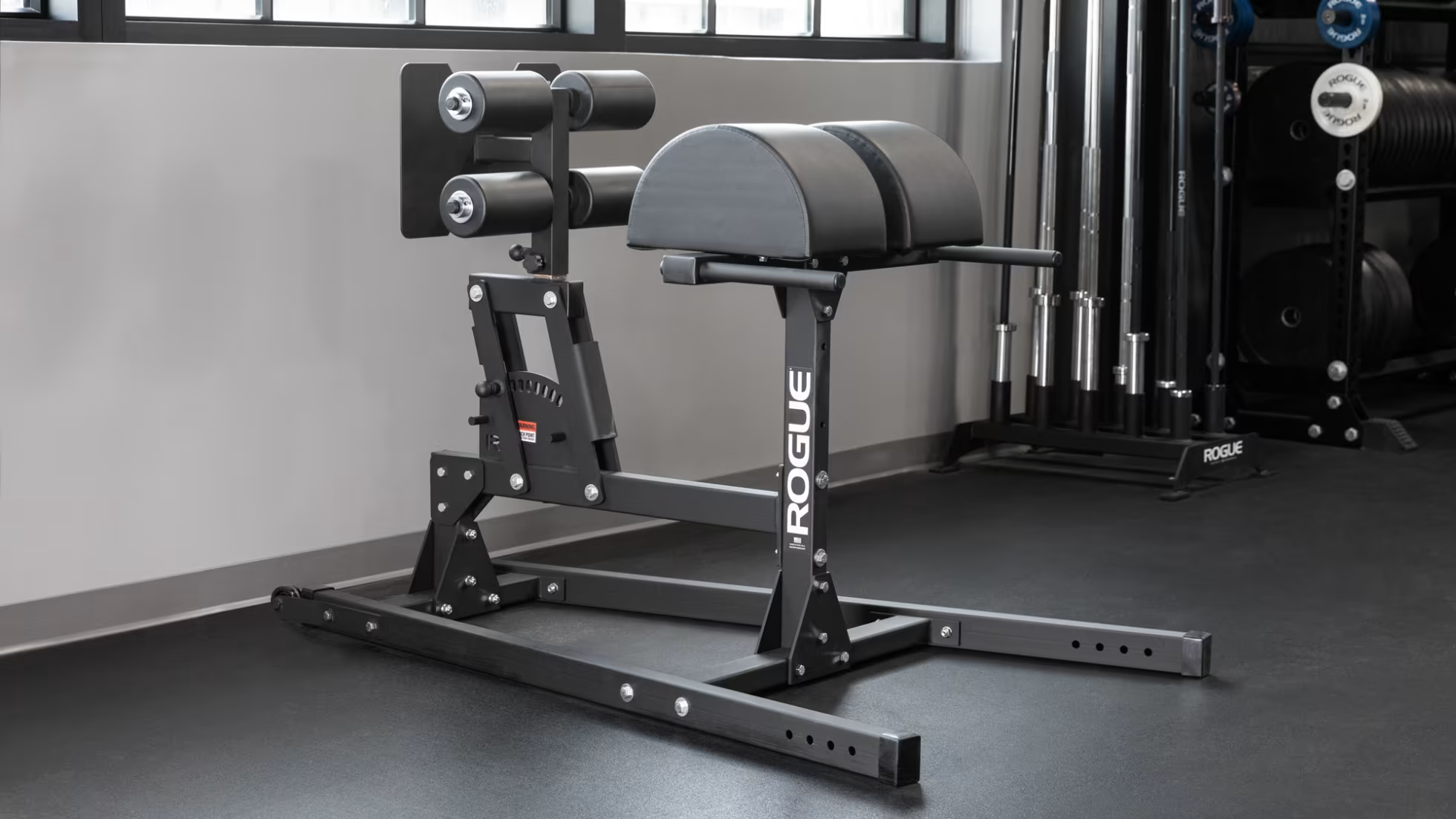
GHD
Glute-Ham Developer. A specialized piece of equipment used to strengthen the glutes, hamstrings, core, and posterior chain. Common movements include GHD sit-ups, hip extensions, back extensions, and glute-ham raises.
GHD Back Extension
A spinal flexion and extension movement performed on a Glute-Ham Developer (GHD). The athlete begins with a neutral spine and arms crossed over the chest. The movement starts by tucking the chin and flexing the cervical spine, then sequentially rounding through the upper and lower back until reaching full spinal flexion. The return is performed in reverse order—extending from the lower back through the upper back and neck—to return to a neutral position. GHD back extensions emphasize controlled spinal articulation, midline strength, and spinal awareness and should be performed with strict control and appropriate loading or volume.
GHD Hip Extension
A posterior-chain movement performed on a Glute-Ham Developer (GHD) where the athlete hinges at the hips while maintaining a neutral spine, then extends the hips to return the torso to a straight, horizontal position. The movement emphasizes the glutes, hamstrings, and lower back while reinforcing proper hip-hinge mechanics. GHD hip extensions are commonly used to build posterior-chain strength and resilience when performed with appropriate control and volume.
GHD Sit-Up
A core movement performed on a Glute-Ham Developer (GHD) that significantly increases the range of motion compared to traditional sit-ups. The athlete lowers the torso back past parallel, then contracts the core to return to an upright position. GHD sit-ups develop midline strength and endurance but place higher demands on the hip flexors and abdominal muscles, requiring proper scaling and progression to be performed safely.
Girl Workout
A category of classic CrossFit benchmark workouts that are given female names, such as Fran, Cindy, and Grace. Girl Workouts are designed to test different aspects of fitness—strength, conditioning, and skill—and are repeated over time to measure progress and improvement. Examples here.
Glide Kip
A foundational gymnastics movement used primarily for bar and ring skills, where the athlete swings between a hollow and arch position to generate controlled momentum. The glide kip teaches proper timing, shoulder engagement, and core control, allowing the athlete to efficiently transition into movements such as pullovers, toes-to-bar, and muscle-ups. It is commonly taught as an early skill progression to build efficient kipping mechanics before advancing to more complex gymnastics movements.
Glute-Ham Raise
A posterior-chain strength movement performed on a Glute-Ham Developer (GHD) where the athlete lowers the torso forward by extending the knees, then contracts the hamstrings and glutes to return to an upright position. The movement places heavy emphasis on the hamstrings while also engaging the glutes and lower back. Glute-ham raises are commonly used to build posterior-chain strength, improve knee stability, and support performance in movements like squats and deadlifts.
Good Morning
A strength and posterior-chain movement performed with a barbell resting across the upper back, similar to a back squat setup. The athlete hinges at the hips while keeping a neutral spine, lowering the torso forward until tension is felt in the hamstrings, then returns to standing by driving the hips forward. Good mornings strengthen the hamstrings, glutes, and lower back and reinforce proper hip-hinge mechanics used in movements like the deadlift and squat.
Ground to Overhead (G2OH)
A general movement standard where an object is lifted from the ground to a locked-out position overhead by any approved method. Athletes may use movements such as a snatch, clean and jerk, or any combination that brings the weight from the floor to overhead. Ground to overhead emphasizes efficiency and strategy and is commonly used in conditioning workouts to allow athletes to choose the most effective technique.
H
Handstand
An inverted gymnastics position where the athlete balances on the hands with the body fully extended and stacked from hands through shoulders, hips, and feet. The movement requires shoulder strength, core stability, balance, and body awareness to maintain control. Handstands are commonly used as a foundational skill for inverted movements such as handstand push-ups and handstand walking, and may be performed against a wall or freestanding depending on skill level.
Handstand Pirouettes
An advanced handstand skill where the athlete rotates the body while inverted by shifting weight from one hand to the other, typically turning 90 or 180 degrees at a time. The movement requires strong shoulder stability, core control, balance, and precise hand placement. Handstand pirouettes are commonly used in handstand walking progressions and high-skill gymnastics training to develop control and directional changes while inverted.
Handstand Push-Up (HSPU)
A vertical pressing gymnastics movement where the athlete lowers the head to the floor or an ab mat while inverted, then presses back to full arm extension. Handstand push-ups develop shoulder strength, midline stability, and body control and appear in multiple variations depending on skill level and workout intent.
- Strict Handstand Push-Up – Performed without leg assistance, relying solely on shoulder and upper-body strength. This variation builds maximal pressing strength and control.
- Kipping Handstand Push-Up – Uses a coordinated kip from the hips and legs to assist the press, allowing for higher repetition capacity in conditioning workouts.
- Wall-Facing Handstand Push-Up – Performed with the athlete facing the wall, promoting better body alignment, shoulder engagement, and control compared to back-to-wall variations.
- Pike Handstand Push-Up – A scaled variation performed with feet on a box or bench and hips piked, reducing load while reinforcing pressing mechanics and inversion awareness.
- Deficit Handstand Push-Up – Performed with hands elevated on plates or parallettes, increasing the range of motion and difficulty of the press. This variation demands greater shoulder strength and control.
- Freestanding Handstand Push-Up – Performed without wall support, requiring exceptional balance, midline stability, and shoulder strength. This is the most advanced variation and is typically seen in high-level skill work or competition settings.
Handstand Walk
A gymnastics skill where the athlete walks forward while inverted, balancing on the hands with the body stacked and controlled. Handstand walks require shoulder strength, core stability, balance, and coordination. They are commonly used in higher-skill conditioning workouts and competitive CrossFit settings, often performed for distance or within complex movement combinations.
Hang Clean
A clean variation that begins with the barbell in the hang position above the knees rather than on the floor. The athlete explosively extends the hips and pulls the bar upward, then receives it on the shoulders in a squat or partial squat depending on the variation. Hang cleans emphasize timing, hip power, and proper bar path and are commonly used for skill development, strength work, and conditioning workouts.
Hang Power Clean
A clean variation that begins with the barbell starting above the knees (the hang position) rather than on the floor. The athlete explosively extends the hips and pulls the bar upward, receiving it on the shoulders in a partial squat above parallel. Hang power cleans emphasize speed, timing, and proper hip drive while reducing the complexity of the initial pull, making them a common choice for skill development and conditioning workouts.
Hang Power Snatch
A snatch variation that starts with the barbell in the hang position above the knees rather than on the floor. The athlete explosively extends the hips and pulls the bar overhead, catching it in a strong, stable position above parallel without dropping into a full squat. Hang power snatches emphasize speed, timing, and proper bar path while reducing the complexity of the first pull, making them useful for skill development and conditioning workouts.
Hang Snatch
A snatch variation that begins with the barbell in the hang position above the knees and is received in a full overhead squat. The athlete explosively extends the hips to elevate the bar, then rapidly drops under it to catch the bar overhead in a deep squat before standing to full extension. Hang squat snatches emphasize speed, coordination, and stability in the receiving position and are commonly used to refine snatch technique and build confidence under the bar.
Hero WOD
Workouts created in honor of fallen military service members, first responders, and heroes. Hero WODs are often longer and more demanding, designed to be performed with respect and intention.
Hollow Rock
A core stability movement performed from the hollow body position, where the athlete lies on their back with shoulders and feet elevated off the floor, arms extended overhead, and lower back pressed firmly into the ground. From this position, the body gently rocks back and forth while maintaining tension and control. Hollow rocks build midline strength and body awareness and are foundational for gymnastics movements such as toes-to-bar, kipping pull-ups, and handstand work.
I
Inverted Burpee
A high-skill variation of the traditional burpee that adds a controlled handstand element. From a supine (lying) position, the athlete rolls or kips up to standing, then continues into a controlled handstand before returning to the ground and repeating. Inverted burpees require greater body control, gymnastics awareness, and shoulder stability than standard burpees and are commonly programmed in conditioning workouts for athletes with solid foundational strength and movement quality.
J
Jerk
An Olympic lifting movement where the barbell is driven from the shoulders to a locked-out position overhead using explosive leg drive. After a dip and drive, the athlete receives the bar overhead by dropping under it, typically in a split or power stance. Jerks emphasize speed, coordination, and overhead stability and are commonly performed as the push jerk or split jerk.
K
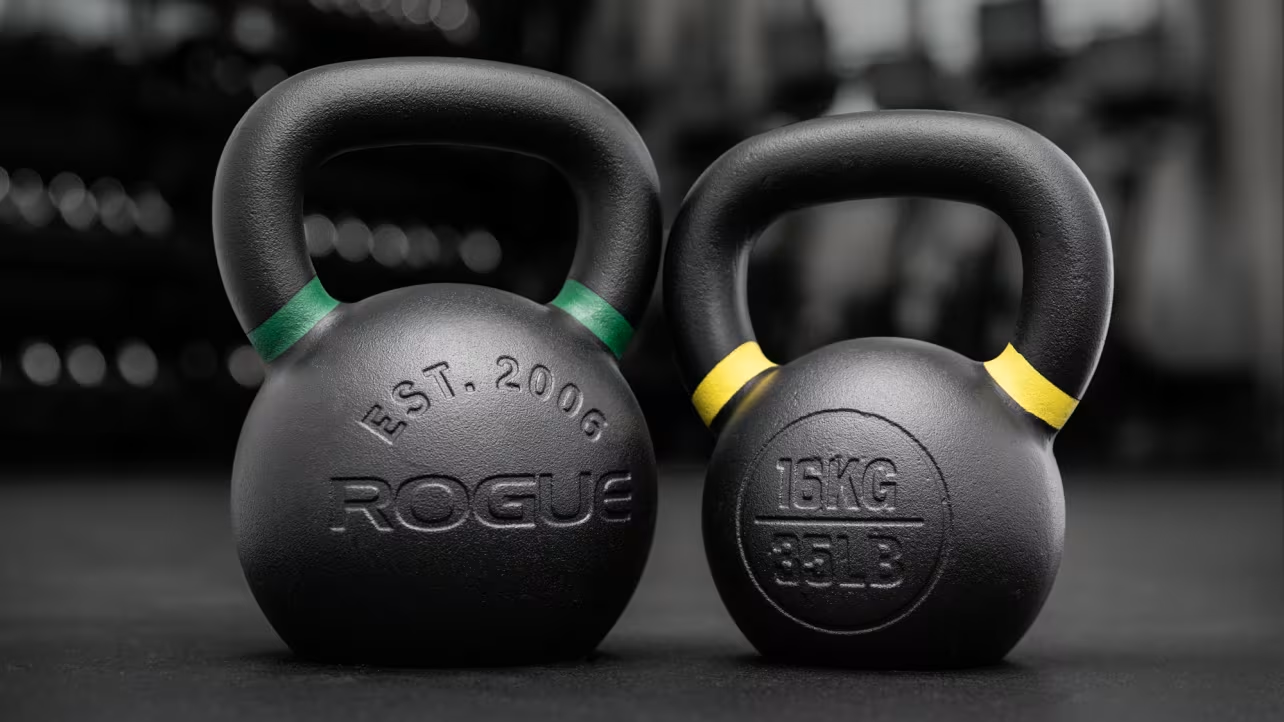
Kettlebell
A cast-iron or steel weight with a handle, used for swings, snatches, cleans, presses, and carries. Kettlebells develop full-body strength, power, stability, and coordination.
Kettlebell Snatch
A dynamic, full-body movement where a kettlebell is lifted from a swing or hang position to a locked-out overhead position in one continuous motion. The athlete generates power through the hips, allowing the kettlebell to travel close to the body and rotate smoothly around the wrist at the top. Kettlebell snatches develop power, coordination, grip endurance, and cardiovascular conditioning and are commonly used in conditioning workouts and skill-based training.
Kettlebell Swing (KBS)
A hip-hinge movement where the athlete drives the kettlebell forward using explosive hip extension, allowing it to swing to chest height (Russian) or overhead (American), depending on the standard. The movement emphasizes posterior-chain power, core stability, and efficient hip drive rather than lifting with the arms. Kettlebell swings are commonly used in conditioning workouts to build strength, power, and cardiovascular endurance.
Knees to Elbow (K2E)
A gymnastics core movement performed while hanging from a pull-up bar, where the athlete lifts the knees to make contact with the elbows. The movement may be performed strictly or with a kip, depending on the workout and athlete skill level. Knees-to-elbows develop midline strength, grip endurance, and coordination and are commonly used as a progression toward toes-to-bar in conditioning workouts.
L
L Pull-Up
A pull-up variation performed while maintaining an L-sit position, with the legs extended straight out in front throughout the movement. The athlete pulls from a dead hang to chin over the bar while keeping the core engaged and legs parallel to the floor. L pull-ups significantly increase the demand on midline strength, hip flexor endurance, and upper-body pulling capacity and are commonly used as an advanced strict gymnastics movement.
L-Sit
A core and gymnastics hold where the athlete supports themselves on the floor, parallettes, rings, or bars with arms locked out while the legs are extended straight in front, forming an “L” shape with the torso. The movement requires significant midline strength, hip flexor endurance, and shoulder stability to maintain the position. L-sits are commonly used to build core control and serve as a foundational skill for advanced gymnastics movements.
L-Sit (Hanging)
A gymnastics core hold performed while hanging from a pull-up bar with the legs extended straight out in front, forming an “L” shape with the torso. The athlete maintains locked arms, active shoulders, and strong core tension to keep the legs parallel to the floor. Hanging L-sits develop midline strength, hip flexor endurance, grip strength, and body control and are commonly used as a progression toward advanced gymnastics skills such as toes-to-bar and muscle-ups.
L-Sit Rope Climb
A rope climb variation where the athlete ascends the rope while maintaining an L-sit position—legs extended straight in front at hip level throughout the climb. This movement emphasizes upper-body pulling strength, grip endurance, and midline control, as the legs remain elevated rather than assisting the climb. L-sit rope climbs are a higher-skill variation used in conditioning workouts and rope-climb progressions.
M
Metcon
Metabolic Conditioning. A style of workout designed to improve cardiovascular endurance and energy system efficiency through sustained or high-intensity effort. Metcons often combine functional movements, weightlifting, and gymnastics.
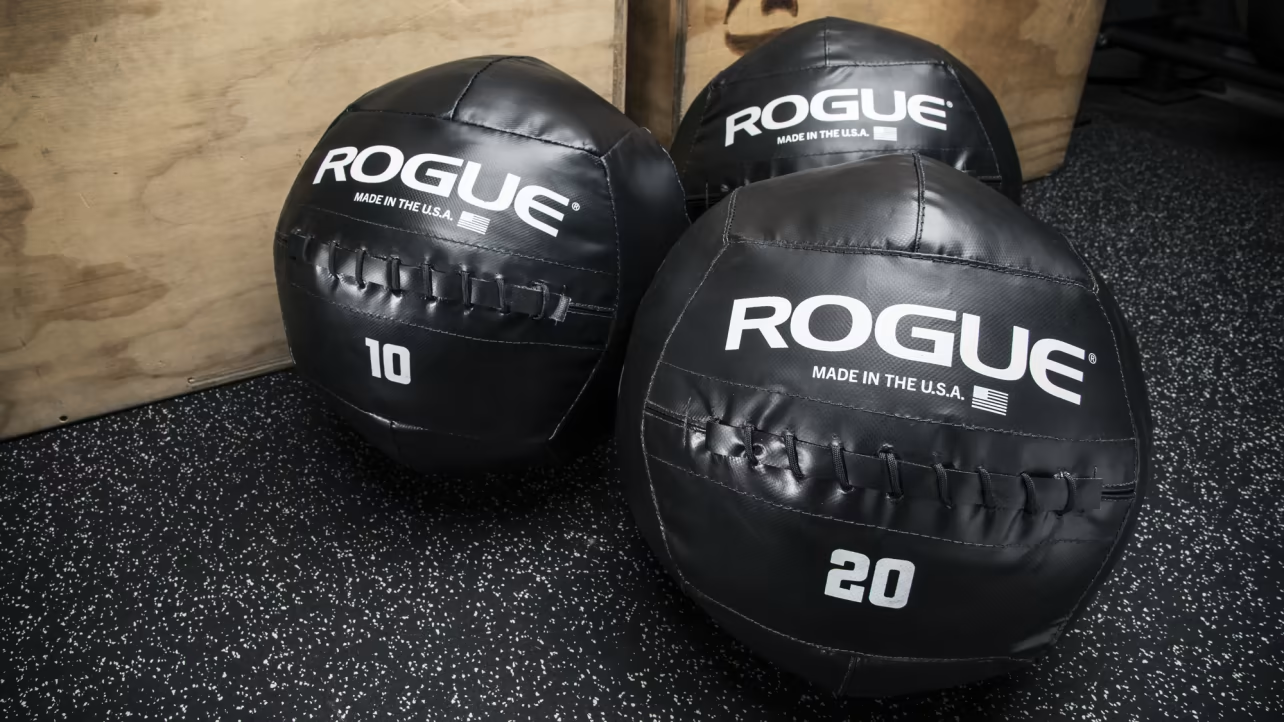
Medicine Ball
A soft, weighted ball commonly used for wall ball shots, cleans, slams, and core work. Medicine balls are available in a variety of weights, commonly 14lb and 20lb in CrossFit workouts.
Medicine Ball Clean
A functional lifting movement where the athlete pulls a medicine ball from the floor and receives it in a front squat position before standing to full extension. The movement mimics the mechanics of a barbell clean while using an odd-shaped object, requiring strong hip drive and coordination. Medicine ball cleans are commonly used in conditioning workouts and introductory training to reinforce clean mechanics and full-body power.
Muscle Clean
A clean variation where the barbell is lifted from the ground or hang position to the shoulders without dropping into a squat or re-bending the knees. The athlete relies on upper-body pulling strength and a controlled turnover to bring the bar into the front rack. Muscle cleans are commonly used as a skill drill to reinforce proper bar path and pulling mechanics and are typically performed with lighter loads.
N
Negatives
A training method that focuses on the eccentric (lowering) phase of a movement. The athlete begins at the top or end position of a lift or skill and slowly lowers under control. Negatives are commonly used to build strength, control, and body awareness and are often programmed as a progression for movements such as pull-ups, muscle-ups, and handstand push-ups.
No Rep
A repetition that does not meet the required movement standard and therefore does not count. No reps are typically called when an athlete fails to complete the full range of motion, misses a required position, or breaks a workout standard. Calling no reps helps maintain consistency, fairness, and movement quality during workouts and competition.
O
Overhead Squat (OHS)
A technically demanding squat performed while holding the barbell locked out overhead. The overhead squat challenges shoulder stability, core strength, mobility, and balance simultaneously. It is a key component of snatch development and a strong indicator of overall movement quality.
Overhead Walking Lunge
A lunge variation performed while holding a barbell, dumbbell(s), or kettlebell(s) locked out overhead. The athlete steps forward into a lunge, maintaining an upright torso and stable overhead position, then continues walking through alternating steps. Overhead walking lunges challenge shoulder stability, core control, balance, and lower-body strength and are commonly used in conditioning and skill-focused workouts.
P
Personal Record (PR)
An athlete’s best performance in a specific lift, workout, or movement. A PR may refer to the heaviest weight lifted, the fastest time completed, or the highest number of repetitions achieved.
Power Clean
A clean variation where the barbell is lifted from the floor to the shoulders and received above parallel, without dropping into a full squat. The athlete relies on explosive hip extension, proper timing, and a strong front rack position to catch the bar efficiently. Power cleans develop speed, power, and coordination and are commonly used in strength training and conditioning workouts.
Power Clean and Push Jerk
A two-part barbell movement where the athlete first lifts the barbell from the floor to the shoulders in a power clean, catching it above parallel, then transitions directly into a push jerk to drive the bar overhead. The movement combines explosive hip extension, efficient leg drive, and precise timing. Power clean and push jerks develop full-body power, coordination, and overhead stability and are commonly used in strength and conditioning workouts.
Power Clean and Split Jerk
A two-part Olympic lifting movement where the athlete first lifts the barbell from the floor to the shoulders in a power clean, catching it above parallel, then drives the bar overhead and receives it in a split stance during the split jerk. The movement combines explosive pulling, efficient leg drive, and precise footwork. Power clean and split jerks develop full-body power, coordination, and overhead stability and are commonly used in strength training and conditioning workouts.
Power Snatch
A variation of the snatch where the barbell is lifted from the ground to overhead and caught above parallel, without descending into a full squat. The athlete relies on explosive hip extension and precise timing to move the bar efficiently and receive it in a strong, stable overhead position. Power snatches are commonly used to develop speed, coordination, and power, especially in conditioning workouts and skill progressions.
Plyo-Box
A sturdy platform used for movements such as box jumps, step-ups, box jump overs, and pistols. Boxes are typically 20″, 24″, or 30″ tall and may be made of wood or foam.
Pull-Over
A gymnastics skill where the athlete transitions from a hang below the bar to a support position above it by pulling the body upward and rotating the hips over the bar. The movement requires upper-body pulling strength, core engagement, and coordination through the turnover. Pullovers are commonly used as a foundational skill for developing bar control and as a progression toward more advanced movements like muscle-ups.
Pull-Up
A bodyweight pulling movement performed while hanging from a bar, where the athlete pulls until the chin clears the bar before lowering back to full extension under control. Pull-ups build upper-body and grip strength while reinforcing proper shoulder engagement. They may be performed strictly or with a kip, depending on the workout and athlete skill level, and are a foundational gymnastics movement in CrossFit.
Pull-Up (Kipping)
A dynamic pull-up variation that uses coordinated hip drive and a hollow-to-arch body position to assist the pulling motion. The athlete generates momentum through the swing to bring the chin above the bar, allowing for higher repetition capacity than strict pull-ups. Kipping pull-ups are commonly used in conditioning workouts and require proper shoulder engagement, timing, and control to be performed safely and efficiently.
Pull-Up (Butterfly)
An advanced kipping pull-up variation where the athlete moves through a continuous, circular motion around the bar. Using coordinated shoulder rotation, core engagement, and precise timing, the athlete cycles reps smoothly and efficiently with minimal pause at the top or bottom. Butterfly pull-ups allow for faster repetitions and are commonly used in higher-skill conditioning workouts, but require solid strict strength, shoulder stability, and technique before attempting.
Push-Up
A bodyweight pressing movement performed from a plank position with hands on the floor and the body held in a straight line from head to heels. The athlete lowers the chest to the ground under control, then presses back to full arm extension while maintaining core tension. Push-ups build upper-body strength, midline stability, and pressing endurance and are a foundational movement used in warm-ups, skill work, and conditioning workouts.
Push Jerk
An overhead lift where the athlete dips and drives with the legs, then rapidly drops under the bar to catch it with arms locked out. The push jerk allows heavier loads to be lifted overhead by incorporating speed and coordination. It is commonly used in strength work and high-skill conditioning workouts.
Push Press
A hybrid movement between the strict press and push jerk. The athlete uses a small dip and drive from the legs to assist the press, but finishes by pressing the bar to full extension without re-bending the knees. The push press develops power and overhead strength while teaching proper bar path.
Q
R
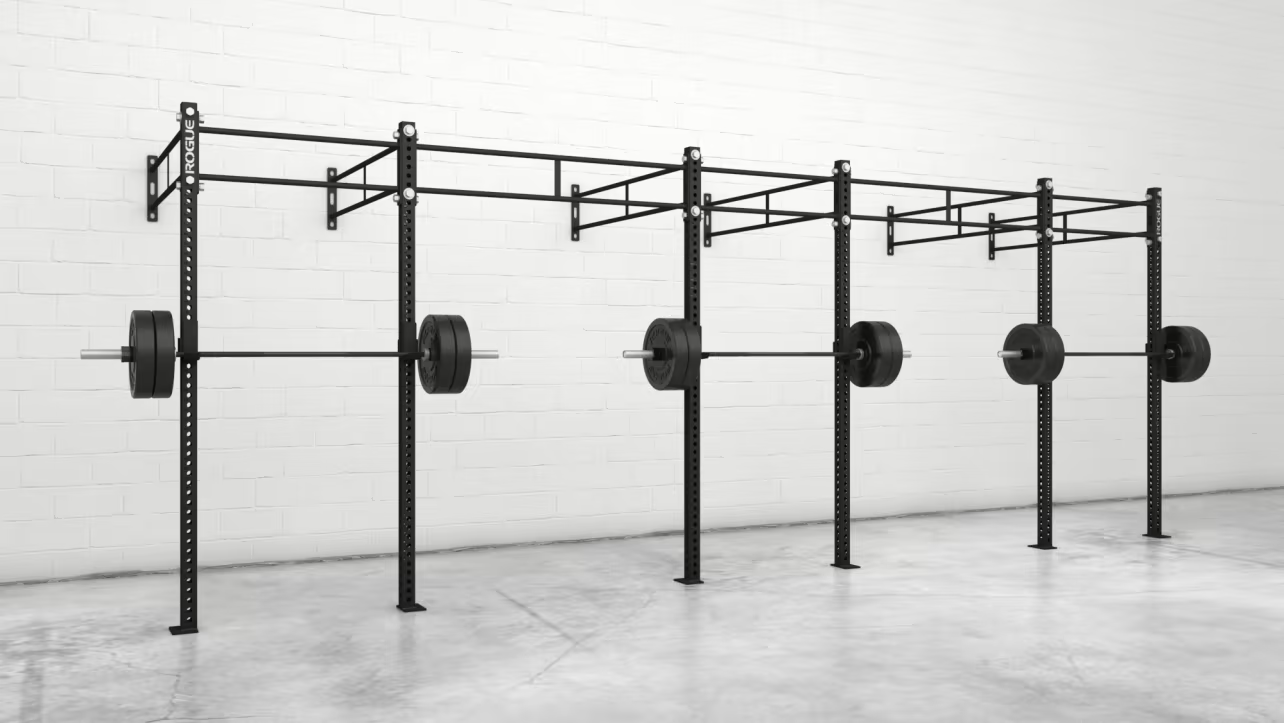
Rig
A fixed metal structure used for pull-ups, toes-to-bar, muscle-ups, and ring work. The pull-up rig is a central piece of equipment in most CrossFit gyms.
Ring Dip
A gymnastics pressing movement performed on gymnastic rings, where the athlete lowers the body by bending the arms until the shoulders drop below the elbows, then presses back to a locked-out support position. Ring dips require significant shoulder stability, strength, and control due to the instability of the rings. They are commonly used in gymnastics progressions and higher-skill conditioning workouts.
Ring Muscle Up / Kipping (RMU)
An advanced gymnastics movement where the athlete uses a coordinated kip to transition from a hang below the rings to a locked-out support position above them. The kip helps generate momentum through the hips, allowing the athlete to move efficiently through the pull, transition, and dip. Kipping ring muscle-ups require strength, timing, and shoulder stability and are commonly used in higher-skill conditioning workouts and competitive CrossFit settings.
Ring Muscle Up / Strict (RMU)
An advanced gymnastics movement where the athlete transitions from a dead hang below the rings to a locked-out support position above them using only upper-body strength, without assistance from a kip. The movement requires a powerful pull, controlled transition, and strong pressing finish while maintaining ring stability throughout. Strict ring muscle-ups build exceptional pulling and pressing strength, shoulder stability, and control and represent a high level of gymnastics proficiency.
Ring Push-Up
A bodyweight pressing movement performed with the hands suspended in gymnastic rings instead of on the floor. The athlete lowers the chest between the rings, then presses back to full arm extension while maintaining a rigid plank position. Ring push-ups increase the demand on shoulder stability, core engagement, and control due to the instability of the rings and are commonly used as a progression toward ring dips or as an advanced push-up variation.
Ring Row
A horizontal pulling movement performed using gymnastic rings, where the athlete pulls the chest toward the rings while maintaining a rigid plank position. The difficulty can be adjusted by changing body angle or foot position. Ring rows build upper-body pulling strength, core stability, and proper scapular engagement and are commonly used as a scalable progression toward pull-ups.
Rope Climb
A gymnastics pulling movement where the athlete ascends a rope using the arms and, when allowed, the legs for assistance. Rope climbs require grip strength, upper-body pulling power, coordination, and technique, such as the J-hook or S-hook with the feet. They are commonly used in conditioning workouts and skill training, with variations that include legless climbs for increased difficulty.
Rounds For Time (RFT)
A workout format where the athlete completes a prescribed number of rounds as quickly as possible. RFT workouts emphasize pacing, intensity, and efficient movement execution.
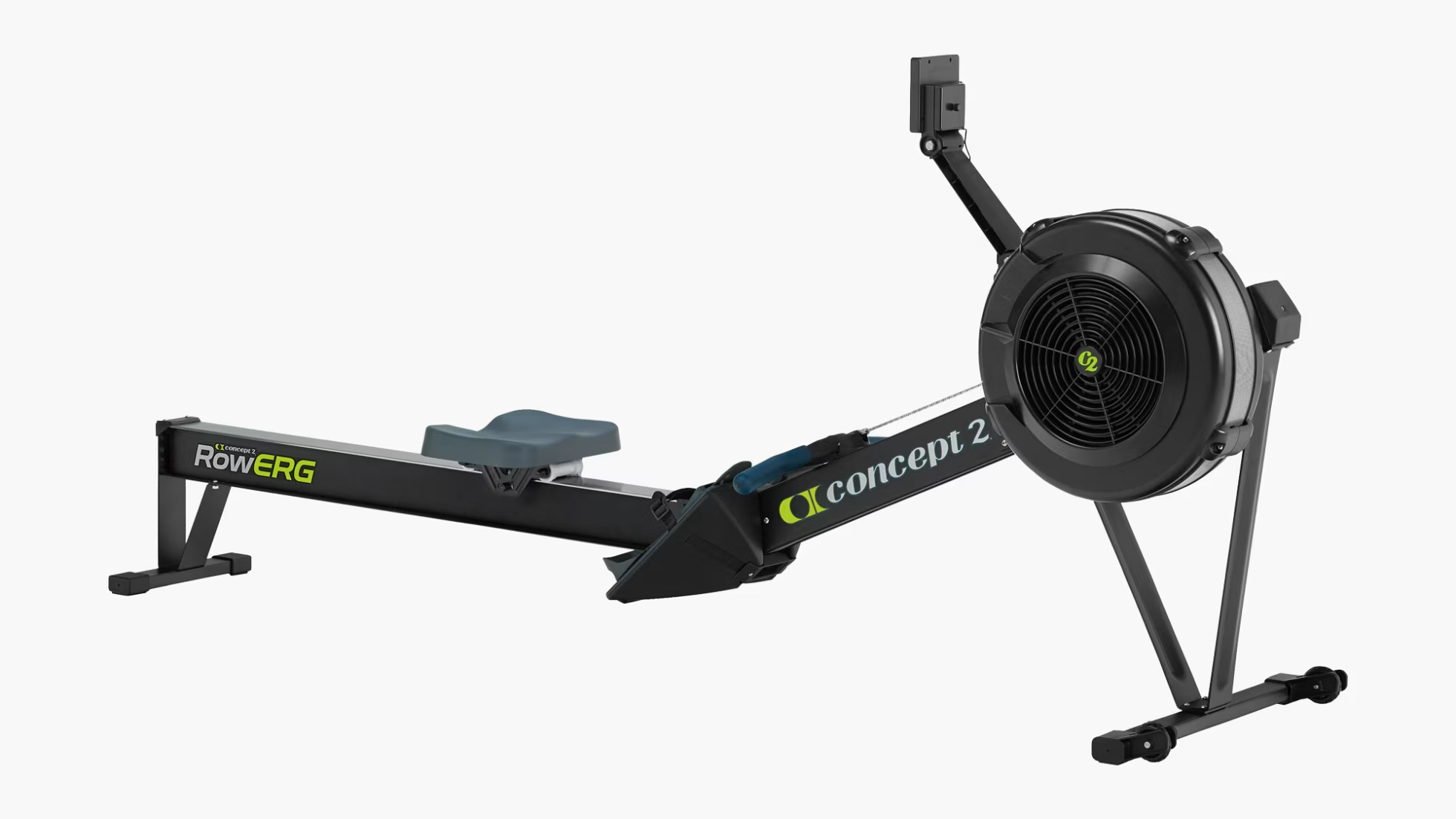
Row Erg
A rowing ergometer used for full-body conditioning and endurance training. Rowing emphasizes leg drive, core stability, and upper-body pulling while remaining low-impact and scalable for all fitness levels.
Rowing
A monostructural conditioning movement performed on a rowing ergometer, where the athlete generates power by driving through the legs, transferring force through the hips and core, and finishing with a pull of the arms. Rowing develops cardiovascular endurance, leg power, and coordination while being low-impact on the joints. It is commonly used in conditioning workouts for distance, calories, or time-based efforts.
RX
As Prescribed. Refers to completing a workout exactly as written, using the prescribed weights, movements, and standards. Scaling options are available for athletes who are still developing strength, skills, or experience.
S
Scaled / Scaling
Refers to modifying a workout to match an athlete’s current ability level. Scaling may include adjustments to weight, movements, volume, or range of motion while preserving the intended stimulus of the workout.
Share the Load (STL)
A partner or team workout format where the prescribed work is divided between teammates in any way they choose. Athletes may alternate reps, movements, or rounds, allowing teams to strategize based on strengths, fatigue, and pacing.
Shoot-Through
A dynamic gymnastics movement where the athlete moves from a plank or bear-crawl position to a seated or supported position by sweeping one or both legs underneath the body. Shoot-throughs require shoulder stability, core strength, coordination, and hip mobility. They are commonly used in conditioning workouts and animal-flow–style movements to build agility, midline control, and fluid transitions between positions.
Shoulder Press
Also known as a strict press or military press, the shoulder press is an overhead press performed without assistance from the legs. The barbell is pressed from the shoulders to a locked-out position overhead using only upper-body and core strength. This movement builds shoulder strength, stability, and control.
Shoulder to Overhead (S2OH)
A general movement standard where an object starts on the shoulders and is moved to a locked-out position overhead. Athletes may use a strict press, push press, push jerk, or split jerk, depending on the workout standards. Shoulder to overhead emphasizes efficiency and strategy and is commonly used in conditioning workouts to allow athletes to choose the most effective pressing method.
Single-Leg Squat (Pistol)
A unilateral squat performed on one leg, where the athlete lowers into a full squat while keeping the non-working leg extended in front, then stands back up under control. Pistols require significant strength, balance, mobility, and coordination through the hips, knees, and ankles. They are commonly used in higher-skill gymnastics workouts and can be scaled with assistance or reduced range of motion.
Single Under
A jump rope movement where the rope passes under the feet once per jump. The athlete uses steady timing, light foot contact, and controlled wrist rotation to maintain consistent rhythm. Single-unders develop coordination, footwork, and cardiovascular endurance and are commonly used as a foundational skill and scaling option for double-unders in conditioning workouts.
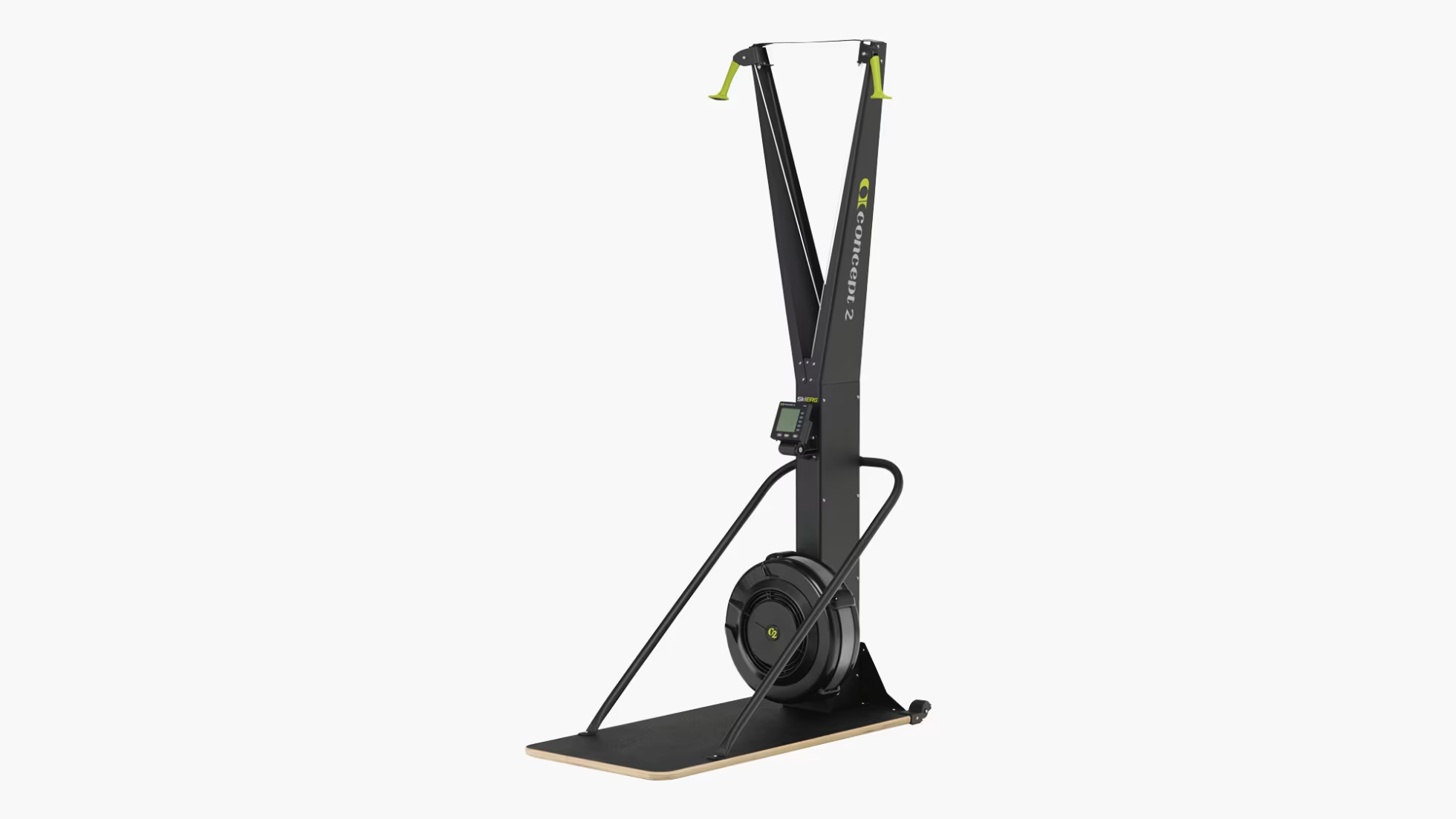
Ski Erg
A conditioning machine that simulates Nordic skiing using a vertical pulling motion. The SkiErg builds upper-body endurance, core strength, and aerobic capacity and can be performed standing or seated.
Skin the Cat
A gymnastics mobility and strength movement performed on rings or a bar where the athlete rotates the body backward through the shoulders from a hang, passing through an inverted position before returning under control. The movement places a strong emphasis on shoulder mobility, stability, and controlled strength through a full range of motion. Skin the cat is commonly used as a drill to improve shoulder resilience and body awareness and should be performed with appropriate progression and control.
Slam Ball
A conditioning movement performed with a non-bouncing medicine ball designed to be thrown forcefully to the ground. The athlete lifts the ball overhead, then explosively drives it downward using the core, shoulders, and hips before retrieving it for the next repetition. Slam balls build full-body power, coordination, and cardiovascular endurance and are commonly used in conditioning workouts for high-intensity, explosive effort.
Snatch
An Olympic lift where the barbell is lifted from the ground to overhead in one continuous motion. The snatch requires speed, mobility, coordination, and precision. It is often performed as a power snatch or squat snatch and is one of the most technically complex movements in CrossFit.
Snatch Balance
A barbell skill movement where the athlete dips and drives the bar upward from the shoulders, then quickly drops under it into a full overhead squat. Unlike a push press or push jerk, the emphasis is on speed under the bar rather than driving it high. Snatch balances develop confidence, timing, and stability in the overhead position and are commonly used as a drill to improve snatch technique and receiving strength.
Split Jerk
A jerk variation where the athlete drives the barbell overhead and receives it in a split stance, with one foot forward and the other back. After catching the bar in a locked-out overhead position, the athlete brings the feet back together under control. The split jerk allows heavier loads to be lifted overhead by increasing stability and is commonly used in Olympic weightlifting and CrossFit for maximal overhead strength and power.
Split Snatch
A snatch variation where the athlete receives the barbell overhead in a split stance, with one foot forward and the other back, instead of a squat. After catching the bar in a stable overhead position, the athlete brings the feet back together under control. The split snatch emphasizes speed, balance, and overhead stability and is less commonly used than the squat snatch, but can be useful for athletes developing confidence and control in the receiving position.
Sots Press
A shoulder and mobility-focused pressing movement performed from the bottom of a squat. The athlete begins in a deep squat with a barbell in the front rack or overhead, then presses the bar to full lockout while maintaining an upright torso and stable squat position. Sots presses challenge shoulder mobility, core stability, and balance and are commonly used as an accessory or skill drill to improve overhead strength and squat positioning.
Straddle Press to Handstand
A gymnastics strength and balance movement where the athlete presses from the floor or parallettes into a handstand without jumping. Beginning in a seated or forward-fold straddle position, the athlete places the hands on the floor or parallettes, shifts the shoulders forward, and lifts the legs overhead by pressing through the shoulders and core. The legs remain in a straddle during the ascent to reduce load and aid balance before coming together in a stable handstand. Straddle press to handstand develops shoulder strength, midline control, flexibility, and body awareness and is commonly used as a progression toward strict press handstands.
Sumo Deadlift
A deadlift variation performed with a wide stance and toes turned slightly outward, with the hands gripping the bar inside the knees. This position places greater emphasis on the hips, glutes, and inner thighs while keeping the torso more upright than a conventional deadlift. Sumo deadlifts are used to build posterior-chain strength and reinforce strong leg drive and hip engagement.
Sumo Deadlift High Pull (SDHP)
A compound barbell movement that begins with a wide, sumo-style stance and hands gripping the bar inside the knees. The athlete drives through the legs to stand the bar up, then continues the movement by pulling the bar upward toward the chest with the elbows leading high and outside. The SDHP combines lower-body power with upper-body pulling and is most commonly used in conditioning workouts to elevate heart rate and reinforce hip drive.
Swing to Backwards Roll to Support
A gymnastics skill performed on rings where the athlete generates momentum from a controlled swing, then rolls backward through the shoulders to transition into a stable support position above the rings. The movement requires coordinated timing, shoulder mobility, core control, and confidence moving through inversion. Swing to backward roll to support is commonly used as a progression for ring strength and transition skills, including muscle-up development and ring control.
T
Thruster
A compound barbell or dumbbell movement that combines a front squat directly into an overhead press in one smooth, continuous motion. The athlete uses the power generated from the squat to drive the weight overhead, finishing with full hip, knee, and arm extension. Thrusters are highly demanding on the legs, core, and shoulders and are commonly used in conditioning workouts to build strength, power, and cardiovascular endurance simultaneously.
Time Cap
The maximum amount of time allowed to complete a workout. If the workout is not finished before the time cap, the athlete stops when time expires and records their progress.
Toes To Bar / TTB (Strict)
A gymnastics movement performed while hanging from a pull-up bar, where the athlete lifts the legs using only core and hip flexor strength—without generating momentum from a kip—to bring the toes to the bar. The movement demands significant midline control, grip endurance, and shoulder stability. Strict toes-to-bar are commonly used to build strength and control that carry over to kipping gymnastics movements.
Toes To Bar / TTB (Kipping)
A gymnastics movement performed while hanging from a pull-up bar, where the athlete uses a coordinated kip swing to bring the toes up to touch the bar. The movement cycles between hollow and arch positions to generate momentum while maintaining core tension and shoulder control. Kipping toes-to-bar develop midline strength, grip endurance, and coordination and are commonly used in conditioning workouts and higher-skill gymnastics progressions.
Touch-and-Go (TNG)
A lifting style where each repetition is performed consecutively without a full stop between reps. The barbell briefly touches the ground and immediately moves into the next repetition, maintaining tension and rhythm. Touch-and-go reps are commonly used in conditioning workouts to increase speed and efficiency compared to dead-stop lifts.
Triple Extension
A powerful movement pattern where the hips, knees, and ankles extend simultaneously to generate maximum force. Triple extension is a key component of Olympic lifts, jumping, and sprinting movements, allowing athletes to efficiently transfer power from the lower body to an object or movement. In CrossFit, strong triple extension is essential for lifts like the clean, snatch, and jerk, as well as explosive athletic performance.
Turkish Get-Up
A controlled, full-body movement where the athlete moves from a lying position on the floor to standing while holding a weight locked out overhead, then reverses the steps back to the ground. The movement is performed in a deliberate sequence that challenges shoulder stability, core strength, balance, and mobility. Turkish get-ups are commonly used for strength development, injury prevention, and improving body awareness and control.
U
Unbroken
Completing a set of repetitions without resting or dropping the weight. Performing movements unbroken requires grip endurance, stamina, and strategic pacing.
V
V-Up
A core movement where the athlete lies flat on their back and simultaneously lifts the legs and torso to meet in the middle, forming a “V” shape at the top of the rep. The movement requires coordination, flexibility, and strong midline engagement to keep the legs and arms straight while moving together. V-ups develop core strength and control and are commonly used in conditioning workouts and core-focused training.
W
Wall Ball Shot
A conditioning movement where the athlete squats while holding a medicine ball, then explosively stands and throws the ball upward to hit a designated target on the wall. After catching the ball, the athlete immediately transitions into the next squat. Wall ball shots combine lower-body strength, upper-body coordination, and cardiovascular endurance and are a staple movement in CrossFit workouts due to their efficiency and scalability.
Wall Walk
A gymnastics movement where the athlete starts in a prone position on the floor and walks the feet up a wall while moving the hands closer to the wall, finishing in a near-vertical or fully vertical handstand position. The athlete then walks back down under control. Wall walks build shoulder strength, core stability, and body awareness and are commonly used as a progression toward handstand work and inverted movements.
WOD
Workout of the Day. The programmed workout for a specific day, typically performed by the class or training group. WODs vary in structure and stimulus and are designed to develop broad, general fitness.
X
Y
You Go I Go (YGIG)
A partner workout format where one athlete works while the other rests, alternating turns throughout the workout. Teammates typically divide the prescribed work evenly or by strategy, allowing for higher intensity during each working interval. You go, I go workouts emphasize teamwork, pacing, and communication.
Z
Zercher Squat
A squat variation where the barbell is held in the crooks of the elbows rather than on the shoulders. The athlete squats with an upright torso while supporting the bar against the body, creating a significant demand on the core, upper back, and legs. Zercher squats build total-body strength, reinforce proper bracing, and challenge posture and positioning under load, making them a useful accessory movement in strength training.